Standards Body Formation
Stand up a new consortium, working group, or foundation — entity choice, governance, membership, and the legal scaffolding that lets the work begin.
Counsel for standards, IP, and open collaboration.
Practical, senior counsel for the organizations that build standards and the companies that engage in standards and open source — from forming a body, to drafting an IPR policy, to navigating the politics of consensus.
Senior counsel for standards bodies and for the companies that engage in standards and open source — across the full lifecycle of an engagement.
Stand up a new consortium, working group, or foundation — entity choice, governance, membership, and the legal scaffolding that lets the work begin.
Design and draft the patent and IPR policy at the heart of the project — contribution and licensing commitments, the scope of necessary claims, and the exclusion mechanisms calibrated to the technology and participants.
Advise on fair, reasonable, and non-discriminatory licensing commitments, from policy design through dispute-sensitive guidance.
Structure the licenses that move technology — patent, copyright, and specification licenses for standards and the implementations built on them.
Build the decision-making, voting, and process machinery that produces durable consensus and withstands scrutiny.
Guidance on the competition-law guardrails of standard-setting — due process, information exchange, and the antitrust exposure that comes with collaboration among competitors.
Navigate the convergence of standards and open source — contribution terms, license compatibility, and project governance.
Advise on open-source use and compliance — license obligations and compatibility, contribution policy, and the controls that keep open-source use clean and audit-ready.
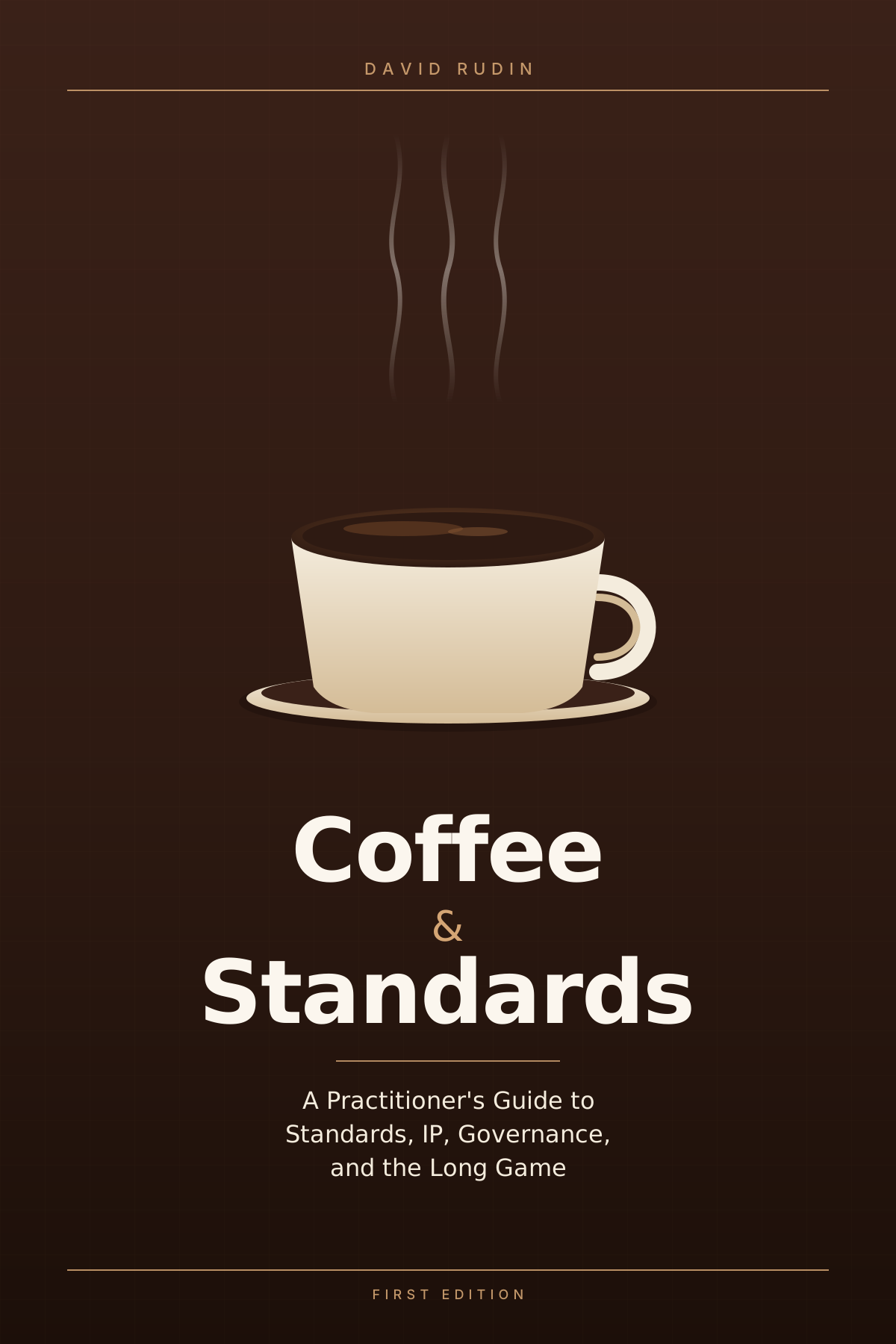
The Book
The practitioner's guide behind the practice — standards, IP, governance, and the long game. The same judgment that informs the work, written down and free to read online.
Standards Law, by foundational.law, is led by David Rudin, who has spent more than two decades building the legal frameworks used by organizations like the Alliance for Open Media, the Joint Development Foundation, and the Open Web Foundation. It serves both the organizations that run standards and open-source efforts and the companies that engage in them. The work is the judgment layer behind these engagements — the tradeoffs, patterns, and practical knowledge that come from doing it long enough to have seen most of the problems more than once.
Read full bioStanding up a standards effort, reworking an IPR policy, or weighing a licensing commitment? Reach out and let's discuss it.
info@foundational.law